Archive
In our archive, you will find past contributions and valuable information
Here you will find a collection of past events and important information.
Summary of the Zurich patient meeting, Gleisarena, 04.09.2026
Patient meeting at the Gleisarena with 26 participants.
26 participants attended the patient meeting at the Gleisarena in Zurich on September 4, 2026. The focus was on exchanging views on diagnoses, medications and new therapeutic approaches, as well as on the personal experiences of those affected.
Topics discussed included new drug classes such as TTR stabilisers, RNA therapeutics and depleters. Switching medication is generally not recommended if the current therapy works well, since new therapies can take several months before their effect can be assessed. Current developments in diagnostics and follow-up monitoring were also addressed: alongside NT-proBNP, further laboratory values such as troponin increasingly play a role. The 6-minute walk test used until now is partly being replaced by cycle ergometry. If the condition is stable, check-ups at the specialised centre can in some cases be reduced to once a year.
Further topics were possible side effects such as skin changes and dizziness, as well as typical physical involvement in amyloidosis, for example of the spine and joints. Cardiac arrhythmias and how to handle the corresponding medications were also discussed.
On AL amyloidosis, the frequent involvement of several organs, modern treatment options such as Dara-CyBorD therapy and its good efficacy, and the importance of early diagnosis were explained in particular. A stem cell transplant is only an option for selected, suitable patients. The aim of treatment is to stop the disease from progressing.
Another focus was the importance of exercise and physical activity. Participants shared their own experiences, and many of them are very active and sporty despite the disease. The open exchange gave those affected the feeling that they are not alone with their illness.
The important role of relatives in care and support was also highlighted. The lively atmosphere and the mutual exchange of experiences shaped the patient meeting.
Summary of the Lucerne patient meeting, 03.07.2026
Regional patient meeting with 35 participants.
On July 3, 2026, a regional patient meeting of Amyloidose Schweiz took place in Lucerne with 35 participants. The focus was on personal exchange, up-to-date information on diagnosis and therapy, and questions about living with amyloidosis.
Topics discussed included experiences with ATTR-CM and AL amyloidosis, accompanying conditions such as carpal tunnel syndrome, drug therapies with Vyndaqel, Beyonttra and Amvuttra, as well as the importance of exercise and adapted physical activity. Most participants reported good tolerability of the medications and emphasised the value of exercise for quality of life and well-being.
Further topics were treatment centres in Switzerland, current developments in AL amyloidosis, the new WhatsApp group of Amyloidose Schweiz, and upcoming association events in Zurich, Davos and Lucerne.
In closing, it was highlighted how important exchange, mutual support, hope and a positive attitude are in dealing with the disease.
Conclusion of the Patient Meeting in Bern, 15.05.2026
Welle 7, Bern.
The patient meeting in Bern once again demonstrated how important personal exchange among affected individuals, relatives and healthcare professionals is. A total of 43 people attended. The meeting was deliberately organized regionally to address the desire for local opportunities for exchange. The openness and willingness of the participants to share personal experiences, challenges and hopes shaped the entire event.
The discussions focused on current developments in ATTR-CM, AL and ATTR-PN amyloidosis as well as new pharmaceutical treatment options. The medications Vyndaqel (Tafamidis), Beyonttra (Acoramidis) and Amvuttra (Vutrisiran) were discussed particularly intensively, including their mechanisms of action, approvals and patients' everyday experiences. It became clear that today's therapies provide many patients with stability, better quality of life and, in some cases, a significant slowing of disease progression. At the same time, it was openly addressed that existing deposits in the heart are currently still difficult to reverse and that research continues to be in strong demand.
Another important focus was the collaboration with the Inselspital Bern and Dr. Moritz Hundertmark. His commitment, his empathetic manner and the increasing interdisciplinary cooperation between cardiology, neurology, nephrology and hematology were particularly highlighted. At the same time, some patients described challenges such as missing contact persons, organizational difficulties or long communication paths. These open responses were considered valuable and are intended to contribute to further improving care.
Particularly impressive was the discussion about the importance of movement, sport and mental attitude in dealing with the disease. Many participants were or are athletically active and emphasized how important it is to remain positive despite limitations and to consciously shape one's life. The possible connection between intense physical exertion and amyloidosis, which is currently under scientific investigation, was also addressed.
The conversations also showed how central partners, relatives and mutual exchange within the association are. Amyloidosis Switzerland is perceived by many affected people as important support – both in the area of information and networking, and as a voice towards doctors, hospitals, authorities and pharmaceutical companies.
Ongoing research, new diagnostic procedures, improved collaboration between centers and new medications give many affected people hope. At the same time, it became clear that there is still a great need for awareness, early diagnosis and close interdisciplinary care.
Conclusion of Amyloidosis Switzerland Association, Meeting of January 27, 2026
In Lausanne.
We held our second event for affected people and relatives in French-speaking Switzerland once again in Lausanne. The "Espace Dickens" venue has proven itself thanks to its central location and good infrastructure.
With just over 50 participants, including accompanying persons, this event generated very strong interest.
Those present were given a summary of the different presentations from the patient event held on November 15 at Lucerne Cantonal Hospital:
Many questions were asked and answered in each section, and participants actively contributed to the discussion. Overall, attendees were very well informed. It is particularly worth noting that the treating physicians are highly praised and take the time to answer questions. Many thanks to the medical staff at this point.
In general, the good effectiveness of the therapies currently available is highly appreciated.
The opportunity to exchange with other affected people is also greatly valued, as many had not had this opportunity before.
For us, this meeting was very impressive and instructive, and it reaffirmed our guiding principle of being a point of contact for those affected as an association. The great interest in the event showed this very clearly.
Information Event 2025
Summary of our information event from November 15, 2025, at the Lucerne Cantonal Hospital
Speakers Summary
Cardiac Amyloidosis - Transthyretin Amyloidosis (ATTR) of the Heart
PD Dr. med. Simon Stämpfli
Cardiac amyloidosis is a disease in which misfolded proteins form amyloid fibrils that deposit in the heart muscle and impair its function. Most commonly, it is transthyretin (TTR) amyloidosis. In this condition, the protein transthyretin becomes unstable, breaks down into smaller units, and deposits in heart tissue. Typical symptoms include shortness of breath, water retention, and cardiac arrhythmias. In recent years, there have been significant advances in therapy, with medications that on one hand prevent the formation of new deposits and on the other hand may possibly degrade existing deposits in the future. Stabilizers: Tafamidis and Acoramidis stabilize transthyretin and thus prevent its breakdown into amyloidogenic fragments. Tafamidis is approved in Switzerland for the treatment of TTR amyloidosis. Acoramidis is about to be approved and is expected to be available in Switzerland in the coming months. Gene Silencers: Vutrisiran is an RNA interference therapeutic that reduces the production of transthyretin in the liver and thus slows disease progression. It is administered subcutaneously every three months. Vutrisiran was approved in Switzerland a few weeks ago for cardiac TTR amyloidosis. Additional active substances with a similar approach are being clinically studied. Antibodies: Cliramitug is a human monoclonal antibody that binds directly to amyloid deposits in the heart muscle and is intended to promote their degradation. Following promising early study data, a Phase 3 study is now underway, in which Swiss centers are also participating. However, the study results are not expected for several years. Conclusion: TTR amyloidosis is evolving from a purely supportively treatable disease to a clearly therapeutically addressable one. Through various mechanisms of action (stabilization, gene silencing, and possibly future amyloid clearance), options for affected patients are expanding significantly.
Diagnosis and Therapy of Hereditary TTR Amyloidosis (Polyneuropathy)
PD Dr. med. Violeta Mihaylova, Neurologist LUKS
Hereditary Transthyretin (TTR) Familial Amyloid Polyneuropathy is a rare but serious disease. A Typical Disease Course: The Case of Mrs. G. Already at 37 years of age, the patient suffered from burning pain in her feet (especially at night) and unintentionally lost weight. Later, daily diarrhea, bloating, nausea, and tingling in her fingers appeared. Despite many gastroenterological examinations (including gastroscopy and colonoscopy), no cause was found for a long time. During the neurological presentation, polyneuropathy was diagnosed and hereditary amyloidosis was suspected due to a positive family history. A genetic test finally confirmed this diagnosis. What Happens in the Body? In TTR amyloidosis, a specific protein (transthyretin) is unstable due to a genetic defect. It breaks down and deposits as so-called "amyloid fibrils" in the tissue. These deposits damage organs and especially nerves over time. The Variety of Symptoms Since amyloid can deposit anywhere in the body, TTR amyloidosis is a "systemic disease". The most common complaints include: • Symptoms of nerve damage (polyneuropathy): Often the first sign. It usually begins in the feet with tingling, numbness, or burning pain and migrates up the legs over the years. Motor deficits occur over time. Walking becomes increasingly difficult. • Muscle and joint problems: A very early warning sign can be carpal tunnel syndrome (numb hands). Tendon ruptures or spinal canal stenosis are also typical. • Autonomic disorders (internal functions): The nervous system that we do not voluntarily control is often affected. This manifests through digestive problems (alternating diarrhea and constipation), dizziness when standing up (blood pressure drop), bladder disorders, or erectile dysfunction. • Heart: Heart failure or rhythm disorders can also occur. Inheritance: A Risk for the Family? The disease is inherited in an "autosomal dominant" manner. This means: if one parent carries the genetic change, each child has a 50% risk of also inheriting the predisposition. Genetic counseling is therefore urgently recommended. The Challenge of Diagnosis Unfortunately, the disease is often recognized late in Europe – on average, 2 to 5 years pass until diagnosis. It is frequently confused with other nerve diseases (such as CIDP). Hope Through New Therapies Early diagnosis is crucial. While the genetic cause cannot be "magically removed," there are now effective medications that can stop or slow the progression of the disease (disease-modifying therapies). There are two main treatment approaches: • Gene Silencing: Medications (such as Patisiran, Vutrisiran, Inotersen, Eplontersen) that prevent the faulty protein from being produced at all. • Stabilizers: Medications (such as Tafamidis) that stabilize the protein so it does not break down and deposit. These medications are usually covered by health insurance. Conclusion Hereditary TTR amyloidosis is a complex disease that affects the entire body. But thanks to modern medicine, it is now treatable.
Resilience in Amyloidosis
Martin Bürgi, Board Member Amyloidosis Switzerland
The diagnosis of amyloidosis often hits those affected and their loved ones like a shock. Although we had no influence on getting sick, we have great influence on how we deal with it. With resilience – psychological resistance –, we can contribute greatly to leading a fulfilling life nonetheless. What does resilience mean? Resilience is the "immune system of the psyche". It helps us cope well with stressful situations. Thanks to our ability to adapt to challenging life situations. Research shows that people have positive development opportunities even under difficult circumstances. The key is to recognize and utilize one's own resources. • We can shape how we deal with the diagnosis. We cannot influence external circumstances. But how we deal with them is in our power. • Acceptance and information create security. Engaging with the illness, asking questions, acquiring knowledge and categorizing it correctly makes it easier to accept the new reality. Being informed provides security. And helps accept the new situation. • Optimism strengthens us. Positive moments, like spending time with loved ones. Gratitude for everything beautiful and joyful, as well as a healthy dose of humor support us in managing daily life. • Use your own strengths. Our experiences and the ability to focus on our own strengths help master challenges. Creativity enables us to reorient and helps us find new ways that facilitate and enrich our daily lives. • Take responsibility for yourself. Let's be mindful of ourselves. This also includes letting go of what doesn't serve us well and burdens our energy reserves. Taking time for recovery and an adapted lifestyle promote well-being. • Cultivate social relationships. Exchange with family members, other affected individuals and professionals convey belonging and support. And shows us we are part of a team where we can seek help. • Set realistic goals. Let's move forward in small steps. But let's move! Whether movement in an adapted measure. Adapting habits, for example in nutrition, can lead to noticeable progress. Finding meaning Even if the question of "why" the illness brings no helpful answers, searching for meaning can arise in one's own actions: sharing experiences, especially with younger generations and other affected individuals. Let's set new priorities and consciously perceive beautiful and positive moments. Closing thought The path with amyloidosis is as individual as each person. But we can actively shape it. Resilience is trainable and helps to walk one's own path courageously and positively.
AL Amyloidosis, Cause and Therapeutic Approaches
Dr. med. Rahel Schwotzer
AL amyloidosis is a rare disease in which certain immune cells in the bone marrow – so-called plasma cells – produce faulty protein components (light chains). These light chains are unstable and fold in such a way that they deposit in the body as amyloid and can damage organs such as the heart, kidneys, nerves, or intestines. Currently, about 300 people in Switzerland are affected. The disease is recognized more frequently today than in the past because diagnostics and awareness have improved. The symptoms depend on which organs are affected, for example heart failure, protein loss through the kidneys, weight loss, fatigue, or nerve pain. The diagnosis requires blood tests, special laboratory tests, and usually also a tissue sample to detect the deposits. The treatment aims to stop the malfunctioning plasma cells. Modern therapies from myeloma treatment are used for this purpose, for example chemotherapy, new antibody drugs such as Daratumumab. Many of these therapies have significantly improved prospects in recent years. Early diagnosis is important so that organ damage can be limited. With modern treatment options, significantly more affected individuals today have the chance of a stable disease situation and better quality of life.
Exercise and Movement in Amyloidosis and Heart Failure
PD Dr. med. David Niederseer
The presentation debunks the old saying "exercise kills" – especially for people with amyloidosis. In fact, current studies show very clearly: movement is one of the most important factors for health, quality of life, and longer life, including and especially in chronic diseases like amyloidosis. Over 2,000 years ago, Hippocrates said that the right amount of exercise and nutrition was the key to health. Today we know scientifically why: as we age, we lose muscle strength, endurance, and balance. Lack of exercise weakens the entire body – from the heart to muscles to metabolism. Conversely, regular physical activity improves heart performance, lung function, muscles, blood sugar, and weight. Several studies prove: people who exercise regularly have half the risk of cardiovascular diseases, regardless of their genetic predisposition. Hand strength – a sign of muscle health – even predicts how long one will live. Amyloidosis often affects the heart and nerves. Therefore, it is important to strengthen the body without overloading it. Exercise is allowed and recommended, provided the disease is stable. It improves endurance, strength, mood, and daily functionality. Even altitude stays up to 2500m are possible. For healthy adults, older people, and patients with chronic diseases, similar recommendations apply: at least 150 minutes of moderate training per week (e.g., brisk walking, cycling, swimming) or 75 minutes of more intensive activity, plus strength training twice a week. In daily life, as much movement as possible – ideally about 10,000 steps per day. Conclusion: "Exercise kills" is a myth – even in amyloidosis. Movement prolongs life, improves quality of life, and protects the body – regardless of age and with any pre-existing condition.
Nutrition in Amyloidosis and Heart Failure
Julia Zwickl, Nutritional Counseling LUKS
Nutrition plays an important supportive role in amyloidosis, even though it does not directly influence the course of the disease. The goal is to improve quality of life and prevent accompanying symptoms such as muscle wasting. A heart-healthy diet forms the foundation and combines principles of Mediterranean and balanced nutrition. Plant-based foods such as vegetables, fruits, legumes, and whole grain products are in the foreground, as well as the use of healthy fats, especially olive and rapeseed oil. Fish should be consumed in moderate amounts, while red meat and heavily processed products should be reduced as much as possible. Spices and herbs replace salt to reduce sodium intake. The plate model serves as a simple guide for a balanced meal. The plate is mentally divided into three equal areas. One third consists of a starchy side dish such as potatoes, rice, pasta, or whole grain bread, which provides the body with energy in the form of carbohydrates. The second third forms the protein source, which is important for building and maintaining muscles as well as for the immune system. Foods such as meat, fish, eggs, dairy products, or plant-based alternatives such as legumes or tofu are suitable here. The last third is filled with vegetables to provide the body with important vitamins, minerals, and dietary fiber. In amyloidosis, sufficient protein intake is particularly important because the risk of muscle wasting is increased. A protein-rich diet has no influence on the course of amyloidosis but promotes quality of life. If heart failure occurs as a result of the disease, the following recommendations become additionally important: Fluid intake should be individually coordinated with the doctor, usually about 1.5 liters per day. Regular weight monitoring helps detect water retention early. Additionally, keeping a drinking diary can help maintain an overview of fluid intake. Salt reduction can additionally help reduce water retention. Salt should be reduced gradually so that the taste buds can adjust to the reduced salt content in food. Replace salt with fresh herbs and spices. Alcohol is harmful to the heart and can additionally weaken it. Therefore, alcohol should be reduced or stopped as much as possible. In summary: A varied, fresh, and minimally processed diet, combined with adapted fluid and salt intake as well as a reduction in alcohol consumption, supports the well-being and quality of life of those affected.
Review of Exchange Events for Patients and Relatives in Basel, Zurich and Lucerne
A brief review of our meetings 'Exchange for Patients and Relatives' in Basel, on October 3, 2025, Zurich, on October 10, 2025, and Lucerne, on October 17, 2025.
In total, we welcomed 32 people at these three events, including five relatives. The insights from these three events are very multifaceted.
On one hand, there is the very positive approach to the challenges that patients face. Great importance is placed on physical activity, whether through walks, e-bike rides, looking forward to the upcoming cross-country skiing season, or applying exercises from our exercise brochure.
Supporting this are the partners who care deeply about the well-being of those affected and actively participate.
It is highly valued in consultations to always be examined by the same doctor, as this builds a good relationship between patient and doctor. Getting to know each other and staying informed has a positive effect on the overall course of the disease. In contrast, other patients describe the constant change of treating physicians as stressful and tedious, not conducive to therapy or well-being.
Furthermore, it is evident that some participants feel insufficiently informed about their disease. However, this is also due to not actively seeking information, which should be a prerequisite for understanding the disease, its effects, and its treatment.
A major challenge is being affected by AL amyloidosis, as already known in diagnosis. The often numerous symptoms, depending on the affected organs, make daily life individually difficult. The effects of therapies are described as not easy, but the often good response to today's therapy options is highly emphasized. Several attendees reported how exhausting and difficult it is to manage daily life with polyneuropathy.
Opportunities for information and exchange, such as at these meetings, are valued especially by relatives. The possibility for 'those in the same boat' to exchange and inform themselves in informal settings will continue to be offered in 2026. Dates and meeting points will be announced in due time.
Exchange for Patients and Relatives, September 5, 2025 in Bern
At our exchange for patients and relatives in Bern, we were able to welcome 7 patients and one relative.
In a pleasant atmosphere, information could be exchanged and questions asked. The feedback shows the need for information on dealing with amyloidosis in everyday life.
Particularly regarding nutrition and exercise. The exchange of experiences with other affected people is highly valued and considered helpful.
It should be noted that it is important to advocate for diagnosis. Given the often very non-specific symptoms, this is often a challenge for all involved persons. This is something we need to work on and strengthen awareness of amyloidosis.
The fight against amyloidosis and the support of those affected is our mission, which we pursue with passion.
Exchange for Patients and Relatives, August 29, 2025 in Lausanne
Our first exchange for patients and relatives in French-speaking Switzerland was held on August 29 in Lausanne.
With 23 participants, the event was very well attended. 16 patients and 7 relatives were present. Although the guests did not know each other beforehand, an open exchange developed quickly.
Here too, the long and rocky road to diagnosis is evident. Since non-specific symptoms such as carpal tunnel syndrome or a decline in performance often cannot be linked to amyloidosis for a long time. Yet it shows that quality of life can be improved with adequate treatment. Or at least the progression of the disease can be delayed.
Relatives and companions want to be informed. They want to help their affected loved ones manage this disease well and make their lives easier.
Almost all expressed that they had never had the opportunity to participate in such an event before and ask fundamental questions that arise in everyday life since their diagnosis. In this way, we have achieved our main goal of meeting those affected directly and positioning ourselves there.
It was also an impressive event for us, which filled us with great satisfaction and motivates us to continue our work.
Rare Disease Day - We're Contributing
Interview "The Diagnosis is Not the End but a New Chapter"
For Rare Disease Day on February 28, 2025, we had the opportunity to give an interview about amyloidosis and introduce our association. The interview can be read in the "Rare Diseases" supplement in the Brigitte issue from March 19, 2025, to April 1, 2025.
We look forward to many readers!
Here are the online contributions:
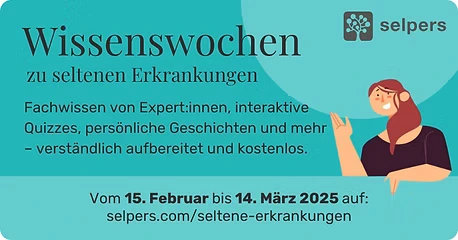
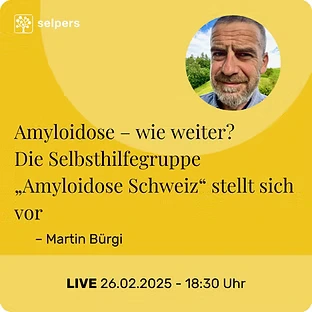
selpers Knowledge Weeks
selpers Knowledge Weeks, we are participating with a contribution.
The Knowledge Weeks will take place from February 15 to March 14, 2025, on selpers.com.
During this time, you will receive information about various rare diseases, can watch expert presentations, read stories from those affected, test your knowledge in interactive quizzes, and much more. The Knowledge Weeks are free and require no registration.
You can find the program at selpers.com/seltene-erkrankungen.
3rd Member Exchange on March 7, 2025
Our third exchange for patients and relatives was held on March 7, 2025, in Lucerne.
16 people, including four accompanying persons, participated. The majority of those affected suffer from ATTR amyloidosis, one person from AL amyloidosis. The exchange was very open and dynamic.
Many patients reported a gradual decline in performance, which was initially misattributed to other diseases. On average, it took 4-6 years until the correct diagnosis. In addition to amyloidosis, accompanying conditions such as carpal tunnel syndrome, heart problems, or spinal canal stenosis often occurred.
The accompanying persons gave impressive accounts of their support in everyday life and during medical visits. Family members have a tremendous influence on the well-being and morale of those affected.
All attendees also spoke highly of the treating medical staff. The commitment of family members and the medical team contributes significantly to the well-being of those affected.
The meeting was a complete success. The open atmosphere and exchange were felt to be very helpful.
2nd Member Exchange on February 1, 2025
Our second exchange for those affected and their relatives was held on February 1 in Winterthur.
All attendees emphasized their athleticism and that even with amyloidosis, importance is placed on regular exercise, as far as their condition allows.
There is awareness that a disease like amyloidosis, with its rarity, can lead to cost-intensive therapies, and support for research is necessary wherever possible.
This second meeting of its kind also provided value to all participants and confirmed to us as an association the necessity of such exchanges.
1st Member Exchange on January 24, 2025
To meet the desire for regional meetings for the exchange of thoughts and information among those affected by amyloidosis, we organized our first member exchange on January 24, 2025, in Olten.
Twelve participants took the opportunity for an intensive and exciting exchange of experiences and information.
This event once again confirmed the relevance and great need for such meetings. It showed how valuable personal exchange is for those affected. This is particularly important considering the fact that patients often don't know any other affected individuals with whom they can exchange experiences.
We see it as our task to continue meeting this need and create platforms that promote exchange and access to information.
Information Event 2024
Summary of our information event on November 2, 2024 at Lucerne Cantonal Hospital
Speakers Summary
Blog Post on selpers
Interview with founding member Martin Bürgi
Contact Us
Do you have questions about past events or would you like more information?